PA
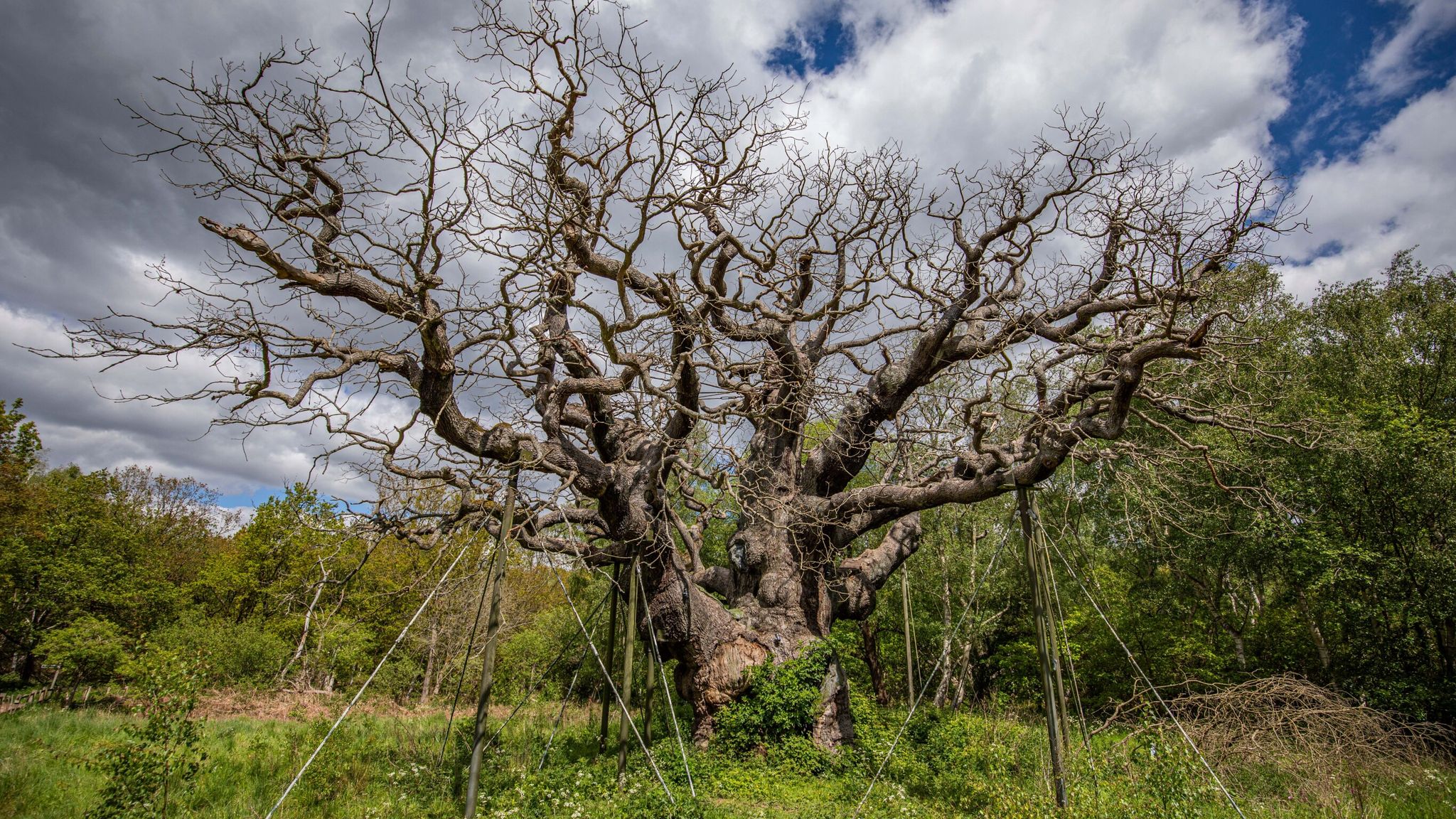
The Major Oak in the heart of Sherwood Forest in Nottinghamshire was thought to be up to 1,200 years old and has perished after its first spring with no leaves, according to the RSPB. The conservation charity, which manages the woodland, said it had been in decline for some time due to heatwaves, droughts, and high visitor footfall, which heavily impacted the surrounding soil……Continue reading…
Source: News Sky
.
Critics:
The rapid decline of established biological systems around the world means that conservation biology is often referred to as a “Discipline with a deadline”. Conservation biology is tied closely to ecology in researching the population ecology (dispersal, migration, demographics, effective population size, inbreeding depression, and minimum population viability) of rare or endangered species.

Conservation biology is concerned with phenomena that affect the maintenance, loss, and restoration of biodiversity and the science of sustaining evolutionary processes that engender genetic, population, species, and ecosystem diversity.The concern stems from estimates suggesting that up to 50% of all species on the planet will disappear within the next 50 years, which will increase poverty and starvation, and will reset the course of evolution on this planet.
Researchers acknowledge that projections are difficult, given the unknown potential impacts of many variables, including species introduction to new biogeographical settings and a non-analog climate. Conservation biologists research and educate on the trends and process of biodiversity loss, species extinctions, and the negative effect these are having on our capabilities to sustain the well-being of human society.
Conservation biologists work in the field and office, in government, universities, non-profit organizations and industry. The topics of their research are diverse, because this is an interdisciplinary network with professional alliances in the biological as well as social sciences. Those dedicated to the cause and profession advocate for a global response to the current biodiversity crisis based on morals, ethics, and scientific reason.
Organizations and citizens are responding to the biodiversity crisis through conservation action plans that direct research, monitoring, and education programs that engage concerns at local through global scales. There is increasing recognition that conservation is not just about what is achieved but how it is done. Conscious efforts to conserve and protect global biodiversity are a recent phenomenon. Natural resource conservation, however, has a history that extends prior to the age of conservation.
Resource ethics grew out of necessity through direct relations with nature. Regulation or communal restraint became necessary to prevent selfish motives from taking more than could be locally sustained, therefore compromising the long-term supply for the rest of the community. This social dilemma with respect to natural resource management is often called the “tragedy of the commons”. From this principle, conservation biologists can trace communal resource based ethics throughout cultures as a solution to communal resource conflict.
For example, the Alaskan Tlingit peoples and the Haida of the Pacific Northwest had resource boundaries, rules, and restrictions among clans with respect to the fishing of sockeye salmon. These rules were guided by clan elders who knew lifelong details of each river and stream they managed. There are numerous examples in history where cultures have followed rules, rituals, and organized practice with respect to communal natural resource management.
The Mauryan emperor Ashoka around 250 BC issued edicts restricting the slaughter of animals and certain kinds of birds, as well as opened veterinary clinics. Conservation ethics are also found in early religious and philosophical writings. There are examples in the Tao, Shinto, Hindu, Islamic and Buddhist traditions. In Greek philosophy, Plato lamented about pasture land degradation:

“What is left now is, so to say, the skeleton of a body wasted by disease; the rich, soft soil has been carried off and only the bare framework of the district left.” In the bible, through Moses, God commanded to let the land rest from cultivation every seventh year. Before the 18th century, however, much of European culture considered it a pagan view to admire nature.
Wilderness was denigrated while agricultural development was praised. However, as early as AD 680 a wildlife sanctuary was founded on the Farne Islands by St Cuthbert in response to his religious beliefs.



Leave a Reply