Adobe Stock
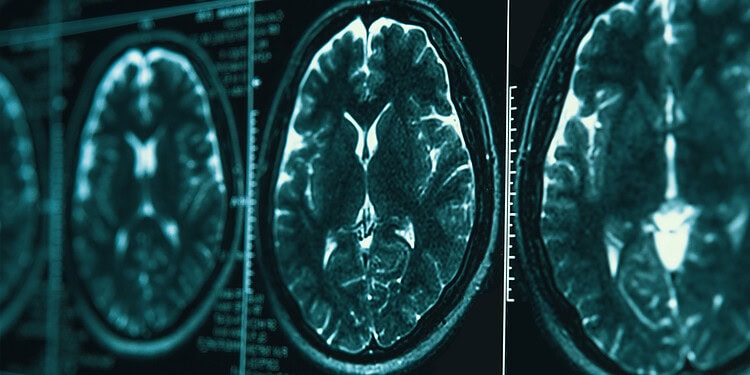
An exploratory study of people with major depressive disorder found that the shape and structure of several regions of the brain’s outer layer, measured before treatment began, were associated with how much patients’ symptoms improved over about eight weeks of taking the antidepressant vortioxetine. The regions included areas of the frontal lobes involved in emotion regulation and planning, visual areas at the back of the brain, and the insula, a region involved in emotional awareness and in sensing the body’s internal state. The paper was published in BMC Psychiatry……..Continue story…
Source: PsyPost
.
Critics:
Neuroinflammation is associated with increased rates of neurodegeneration.[105] Inflammation tends to increase naturally with age. By facilitating inflammation, pollutants such as air particulates and heavy metals cause the CNS to age more quickly. Many late-onset diseases are caused by neurodegeneration.
Multiple sclerosis, Parkinson’s disease, amyotrophic lateral sclerosis (ALS), and Alzheimer’s disease are all believed to be exacerbated by inflammatory processes, resulting in individuals displaying signs of these diseases at an earlier age than is typically expected.

Multiple sclerosis occurs when chronic inflammation leads to the compromise of oligodendrocytes, which in turn leads to the destruction of the myelin sheath. Then axons begin exhibiting signs of damage, which in turn leads to neuron death. Multiple sclerosis has been correlated to living in areas with high particulate matter levels in the air.
According to Lancet (2021), exposure to “environmental pollution with toxins, such as pesticides (eg, paraquat) or chemicals (eg, trichloroethylene), known to be harmful to Parkinson’s disease-related neurons and brain circuits,” is associated with Parkinson’s disease. Multi-decade studies have identified an increased likelihood of Parkinson’s in association with agricultural work, pesticide exposure, and rural habitation.
Chlorinated solvents, used in commercial and industrial application like dry cleaning and degreasing, are associated with increased PD risk, particularly trichloroethylene. Other chemical risk factors include manganese, suspended particles from traffic fumes, and exposure to other heavy metals such as mercury and lead. In the case of Alzheimer’s disease, inflammatory processes lead to neuron death by inhibiting growth at axons and activating astrocytes that produce proteoglycans.
This product can only be deposited in the hippocampus and cortex, indicating that this may be the reason these two areas show the highest levels of degeneration in Alzheimer’s disease. Tiny particles (e.g., engineered nanoparticles and combustion nanoparticle emissions, also called nanomaterials, including those containing manganese) can bypass the blood-brain barrier (the body’s filtering system) and enter the brain as they are breathed in.
The effects of air pollution and particulate matter on cognitive performance are an active area of research. A 2020 meta-analysis reported increased cognitive impairment with increments of 5 μg/m3 of PM2.5. A 2025 meta-analysis indicates that 1 μg/m3 increases in PM2.5, PM10, PM1 and black carbon are associated with decreased cognitive function. Meta-analysis and reviews also indicate that exposure to PM2.5, PM10, and SO2 are associated with decreases in global cognitive function and with cognitive decline.
Epidemiological studies also suggest a link between PM2.5 exposure and cognitive decline.[118] PM2.5 is associated with reduced cognitive function in children, as measured by IQ scores. Improved air quality has been found to have a protective effect on cognitive function. Dementia is an umbrella term for a range of conditions that affect how the brain works, reducing the ability to remember, think and reason. It mainly affects older people and gets worse over time.
Health and lifestyle factors such as high blood pressure and smoking are known to increase the risk of developing dementia. Exposure to air pollution was positively associated with an increased risk of stroke hospital admission (PM2.5, PM10, SO2, NO2, CO, and O3), incidence (PM2.5, SO2, and NO2), and mortality (PM2.5, PM10, SO2, and NO2). There is a “well-recognized link between PM2.5 and vascular injury and the role of vascular injury in dementia”.
Air pollution in the cerebrovascular system may result in “stroke, vascular dementia, or other types of dementia”. The risk of dementia, including Alzheimer’s disease and vascular dementia, may be increased by long-term exposure to PM2.5. Interest in the possible effects of air pollutants on the brain began in about 2002 when Calderon-Garciduenas and colleagues reported that dogs exposed to air pollution in Mexico City showed neuropathological changes of the type associated with Alzheimer’s disease.
This work was an extension of studies undertaken in the 1990s on the effects of Mexico City air pollution on the olfactory epithelium of humans and dogs. Later, interest in possible effects on the brain has been strengthened by epidemiological studies, which suggest that exposure to air pollutants is associated with a decline of cognitive function and the development of dementia.
Magnetite nanoparticles have been found in the brain with a morphology that suggests an exogenous origin. Similar ferrous nanoparticles were found in air collected at traffic roadsides in the UK. These nanoparticles may be able to reach the brain via the olfactory nerves and olfactory bulb, or via the circumventricular organs where the blood-brain barrier is more permeable. In addition, the blood-brain barrier could be made less impermeable by systemic inflammation for which exposure to air pollutants is a known risk factor.
The blood-brain barrier is also more permeable in the very young and old, making these two life stages opportunities for the entry of nanoparticles into the brain, and potential elicitation of neurological damage. In addition to the possible direct effects from nanoparticles reaching the brain, there are indirect mechanisms by which pollutants could potentially lead to brain injury. These include damage to the vasculature, leading to cerebral ischaemia or extravasation of neurotoxic proteins such as fibrinogen. Brain injury could also be secondary to systemic inflammatory responses to air pollution.



Leave a Reply