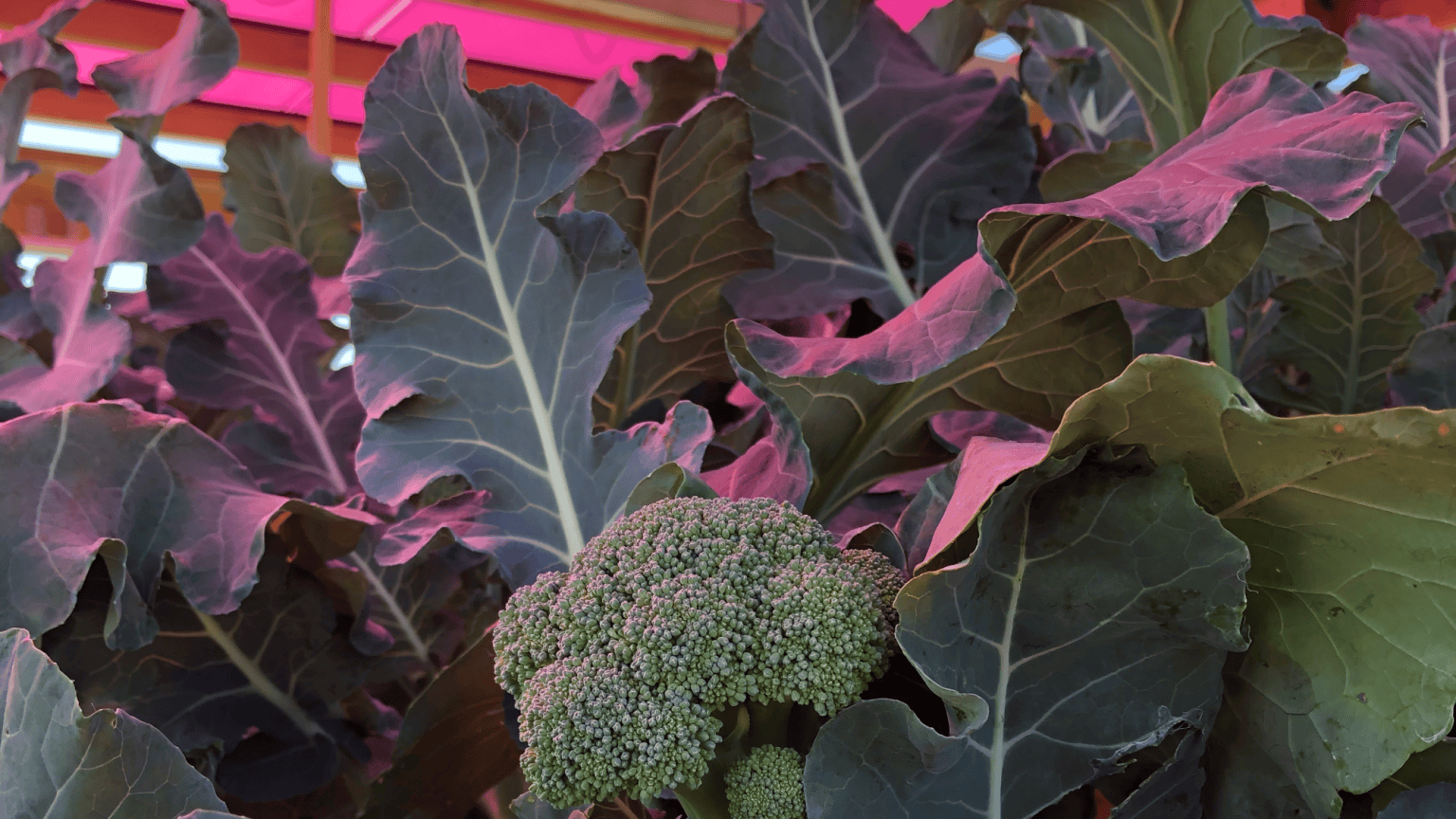
Image: Silvia Ma Lu
The key to helping a nutritious green vegetable grow more efficiently may be the color pink. Magenta-colored solar panels help the broccoli absorb sunlight more efficiently, according to a study published today in the journal Cell Reports Physical Science. “The basic concept is quite straightforward,” Silvia Ma Lu, a study co-author and engineer at Mälardalen University in Västerås, Sweden, said in a statement. “The solar panels use part of the incoming sunlight to generate renewable electricity while allowing part of the light to pass through to the crops growing underneath………Continue reading….
By: Laura Baisas
Source: Popular Science
.
Critics:
Customized, semi-transparent, rose-tinted photovoltaic systems designed for agrivoltaics—the practice of sharing land between agriculture and solar energy generation. Traditional solar panels are opaque and dark blue or black, blocking most light. Magenta panels absorb specific parts of the solar spectrum to generate electricity while letting other wavelengths pass through.
Plants mainly use red and blue light to drive photosynthesis. Magenta solar panels allow these crucial red and blue wavelengths to reach the crops below, while filtering out or utilizing other portions of light. Active photovoltaic materials (like cadmium telluride) are embedded in strips across glass panels, balancing electricity generation with the amount of shade cast on the plants underneath.

Farmers can harvest renewable energy and grow crops on the exact same plot of land without sacrificing field space. Research (such as a 2026 field study on broccoli conducted in Sweden by Mälardalen University researchers) shows that plants grown under magenta panels make much more efficient use of available light.
While crops like broccoli grow just as large under these panels, they can take longer (roughly 25 extra days) to reach full maturity due to reduced overall light levels. Plants in foodscaping designs are typically chosen for their aesthetic and edible appeal. Many vegetables can add colour to foodscaping spaces. Swiss chard, cabbage, and lettuce species come in many colourful varieties, making them a popular choice for foodscaping.
Edible flowers, such as carnations, marigolds, cornflowers and pansies can also be used to add decoration and brightness to an edible landscape. Garden writer Charlie Nardozzi suggests that lemon, apple, plum, and cherry trees can serve as edible alternatives for ornamental trees. He also proposes that blueberry, elderberry and gooseberry plants can substitute popular decorative shrubs such as roses, hydrangeas and privet hedges.
Alpine strawberries and chives have also been suggested as suitable replacements for non-edible flowering plants. Edible landscapes generally consist of a combination of annual and perennial plants. When planning an edible landscape, it is important to know that certain plants require particular environmental conditions. One should also consider the seasonality of the edible plants being used, meaning the time of the year during which a certain species will grow best.
Cool season crops require lower temperatures for growth and seed germination, whilst warm season crops are plants that thrive in higher soil and air temperatures. In hot climates, the ideal plants for foodscaping are those that require little water, such as beans, spinach and broccoli. Whilst certain fruit trees, berries and rhubarb are suitable for cooler climates, root vegetables, cabbages and peas are examples of plants that cope well in extremely cold conditions.



Leave a Reply