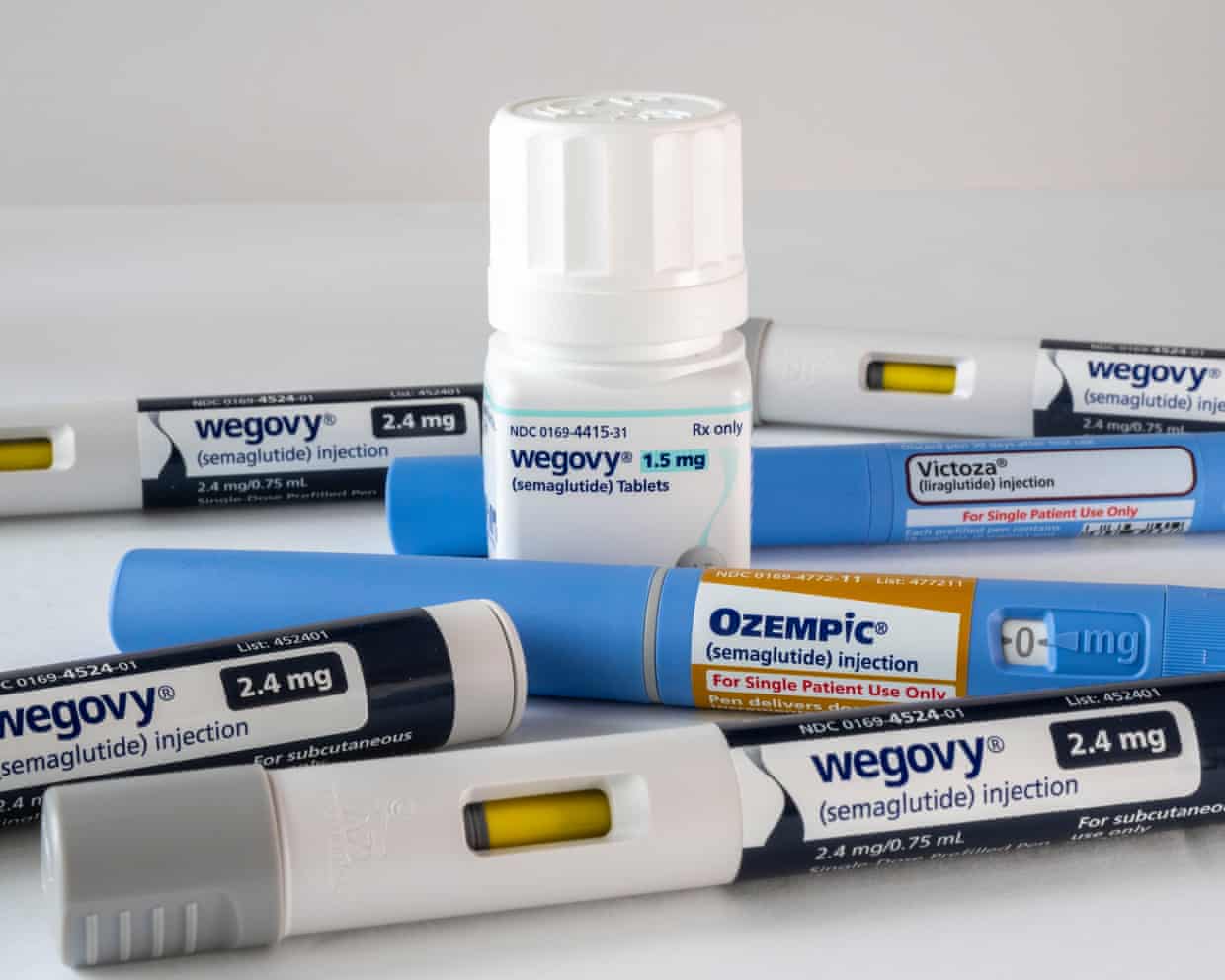
Photograph: Getty
Weight-loss jabs such as Wegovy could be made for just $3 a month, according to new analysis, potentially making the treatment available to millions in poorer countries as patents expire. More than a billion people live with obesity worldwide, with rates rising fast in lower-income nations as they shift to westernised diets and more sedentary lifestyles. The World Health Organization designated semaglutide – sold to treat obesity under the brand name Wegovy, and diabetes under the brand name Ozempic – as an essential medicine in September last year……..Continue reading….
By: Kat Lay, Global health corespondent
Source: The Guardian
.
Critics:
Dietary supplements, foodstuffs, or programs for weight loss are heavily promoted through advertisements in print, on television, and on the internet. The US Food and Drug Administration recommends caution with use of these products, since many of the claims of safety and effectiveness are unsubstantiated, and many of the studies purporting to demonstrate their effectiveness are funded by the manufactures and suffer a high degree of bias.
Individuals with anorexia nervosa or bulimia nervosa, and some athletes, try to control body weight with diet pills, laxatives, or diuretic medications, although the latter two generally have no impact on body fat and only cause short-lived weight-loss through dehydration. Both diuretics and laxatives can cause electrolyte abnormalities which may cause cognitive, heart, and muscle problems, and can be fatal.

Canadian clinical practice 2006 guidelines state that there is insufficient evidence to recommend in favor of or against using herbal medicine, dietary supplements or homeopathy against obesity. Some botanical supplements include high dosages of compounds found in plants with stimulant effects including yohimbine and higenamine.
Caffeine, coffee and green tea can suppress appetite (the hormone ghrelin) and decrease caloric intake (food consumption). It can also cause beneficial changes in fat metabolism or lipolytic actions. According to a review, habitual intake of 3 to 4 cups of coffee appears to be safe and to be associated with the most robust beneficial effects.
Thermogenic actions and, in the case of the caffeinated drink mate (yerba maté), prolonged gastric emptying time may also play a role. Some anti-obesity medications can have severe, even, lethal side effects, fen-phen being a famous example. Fen-phen was reported through the FDA to cause abnormal echocardiograms, heart valve problems, and rare valvular diseases.
One of, if not the first, to sound alarms was Sir Arthur MacNalty, Chief Medical Officer (United Kingdom). As early as the 1930s, he warned against the use of 2,4-Dinitrophenol as an anti-obesity medication and the injudicious and/or medically unsupervised use of thyroid hormone to achieve weight reduction. The side effects are often associated with the medication’s mechanism of action.
In general, stimulants carry a risk of high blood pressure, faster heart rate, palpitations, closed-angle glaucoma, drug addiction, restlessness, agitation, and insomnia. Another medication, orlistat, blocks absorption of dietary fats, and as a result may cause oily spotting bowel movements (steatorrhea), oily stools, stomach pain, and flatulence.
A similar medication designed for patients with Type 2 diabetes is Acarbose; which partially blocks absorption of carbohydrates in the small intestine, and produces similar side effects including stomach pain and flatulence…
National Institute for Health and Clinical Excellence. Clinical guideline 43: Obesity: The prevention, identification, assessment and management of overweight and obesity in adults and children. London, 2006.
“WIN – Publication – Prescription Medications for the Treatment of Obesity”. National Institute of Diabetes and Digestive and Kidney Diseases

Food and Drug Administration. Archived from the original on 18 January 2017. Retrieved 16 December 2019.
FDA Approves New Drug Treatment for Chronic Weight Management, First Since 2014″. FDA. 21 June 2021. Retrieved 19 July 2022.
Drug interventions for the treatment of obesity in children and adolescents”. The Cochrane Database of Systematic Reviews.
Pharmacologic and surgical management of obesity in primary care: a clinical practice guideline from the American College of Physicians”. Annals of Internal Medicine.
Guidance for Industry Developing Products for Weight Management”. Food and Drug Administration.
.
WeightLossDrugs ,WeightLossJourney ,FatLoss ,HealthGoals ,DietPlan ,FitnessMotivation ,LoseWeightFast ,HealthyChoices ,ObesityTreatment ,WellnessJourney ,FitnessTips ,SustainableWeightLoss ,Pharmaceuticals ,HealthyLiving ,MedicatedWeightLoss ,WeightLossEffects ,WeightLossSuccess ,Nutrition ,WeightManagement


Leave a Reply