Getty Images/ iStockphoto
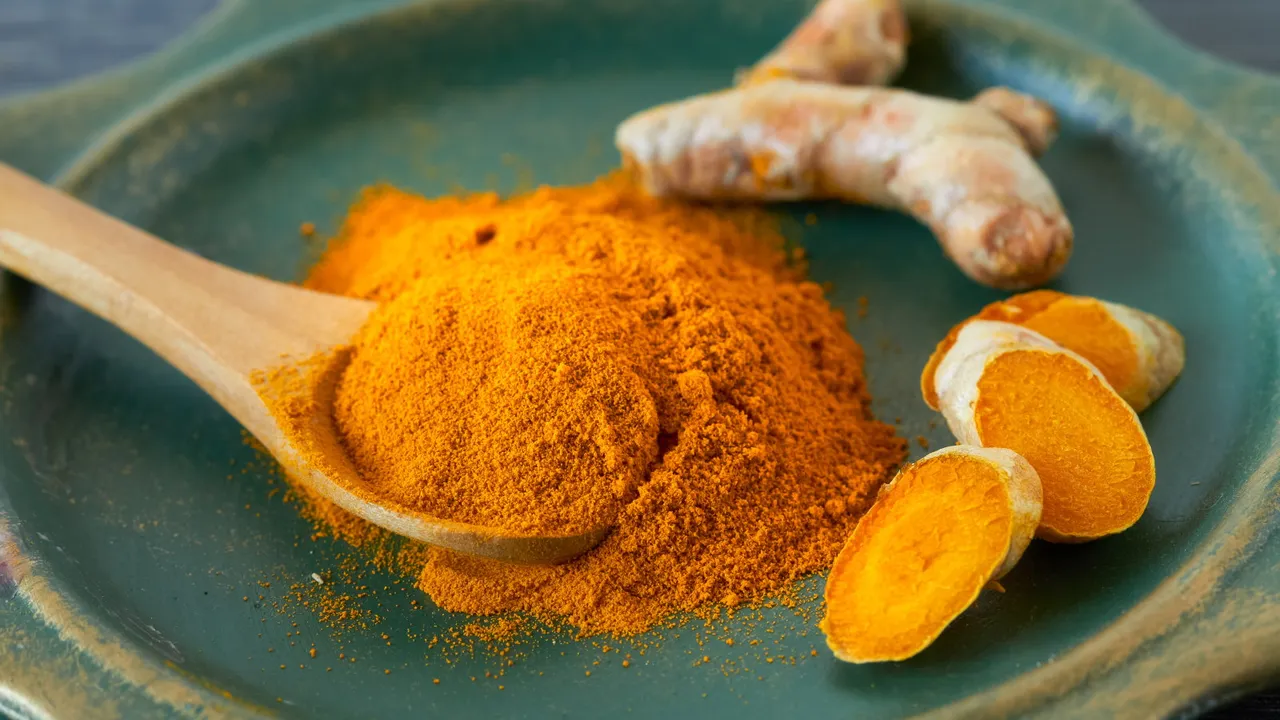
Turmeric is a superfood with many health benefits, including reducing inflammation, supporting digestion, boosting joint health, improving brain function, and more. But why always spend money on store-bought spice when you can grow turmeric indoors at home? A turmeric plant is grown for attractive tropical flowers and deep-orange rhizomes, which can be used fresh or dried to add flavor, color, nutrients, vitamins, and antioxidants to dishes……..Continue reading….
By : Drew Swainston
Source: Homes & Gardens
.
Critics:
Turmeric has been used in Asia for centuries and is a major part of Ayurveda, Siddha medicine, traditional Chinese medicine, Unani,[14] and the animistic rituals of Austronesian peoples. It was first used as a dye, and then later for its supposed properties in folk medicine. In India, it spread with Hinduism and Buddhism, as the yellow dye is used to color the robes of monks and priests.

In Island Southeast Asia, there is linguistic and circumstantial evidence of the ancient use of turmeric among the Austronesian peoples soon after dispersal from Taiwan (starting c. 3000 BCE), before contact with India. In Indonesia and the Philippines, turmeric was used for food, dyeing textiles, medicine, as well as body painting. It was commonly an important ingredient in various animistic rituals.
Kikusawa and Reid (2007) have concluded that *kunij, the oldest reconstructed Proto-Malayo-Polynesian form for “turmeric” in the Austronesian languages, is primarily associated with the importance of its use as a dye. Other members of the genus Curcuma native to Southeast Asia (like Curcuma zedoaria) were also used for food and spice, but not as dyes.
Turmeric (along with Curcuma zedoaria) was also spread with the Lapita people of the Austronesian expansion into Oceania. Turmeric can only be propagated with rhizomes, thus its pre-contact distribution into the Pacific Islands can only be via human introduction. The populations in Micronesia, Island Melanesia, and Polynesia (including as far as Hawaii and Easter Island) use turmeric widely for both food and dye before European contact.
In Micronesia, it was an important trade item in the sawei maritime exchange between Yap and further atolls in the Carolines, where it couldn’t grow. In some smaller islands, the dye was extracted from the leaves, since the rhizomes remained too small in sandy soils. It was also carried by the Austronesian migrations to Madagascar. Turmeric was found in Farmana, dating to between 2600 and 2200 BCE, and in a merchant’s tomb in Megiddo, Israel, dating from the second millennium BCE.
It was noted as a dye plant in the Assyrians’ Cuneiform medical texts from Ashurbanipal’s library at Nineveh from 7th century BCE.[17] In Medieval Europe, turmeric was called “Indian saffron. Turmeric powder is about 60–70% carbohydrates, 6–13% water, 6–8% protein, 5–10% fat, 3–7% dietary minerals, 3–7% essential oils, 2–7% dietary fiber, and 1–6% curcuminoids.[8] The golden yellow color of turmeric is due to curcumin.
Phytochemical components of turmeric include diarylheptanoids, a class including numerous curcuminoids, such as curcumin, demethoxycurcumin, and bisdemethoxycurcumin. Curcumin constitutes an average of 3.14% by weight of assayed commercial samples of turmeric powder; curry powder contains much less (an average of 0.29%). Some 34 essential oils are present in turmeric, among which turmerone, germacrone, atlantone, and zingiberene are major constituents.

Turmeric is one of the key ingredients in many Asian dishes, imparting a mustard-like, earthy aroma and pungent, slightly bitter flavor to foods.It is used mostly in savory dishes, but also is used in some sweet dishes, such as the Lebanese cake sfouf. In India, turmeric leaf is used to prepare special sweet dishes, patoleo, by layering rice flour and coconut-jaggery mixture on the leaf, then closing and steaming it in a special utensil (chondrõ).
Most turmeric is used in the form of rhizome powder to impart a golden yellow color. It is used in many products such as canned beverages, baked products, dairy products, ice cream, yogurt, yellow cakes, orange juice, biscuits, popcorn, cereals and sauces. It is a principal ingredient in curry powders. Although typically used in its dried, powdered form, turmeric also is used fresh, like ginger.
As turmeric and other spices are commonly sold by weight, the potential exists for powders of toxic, cheaper agents with a similar color to be added, such as lead(II,IV) oxide (“red lead”). These additives give turmeric an orange-red color instead of its native gold-yellow, and such conditions led the US Food and Drug Administration (FDA) to issue import alerts from 2013 to 2019 on turmeric originating in India and Bangladesh.
Imported into the United States in 2014 were approximately 5.4 million kilograms (12 million pounds) of turmeric, some of which was used for food coloring, traditional medicine, or dietary supplement. Lead detection in turmeric products led to recalls across the United States, Canada, Japan, Korea, and the United Kingdom through 2016.
Lead chromate, a bright yellow chemical compound, was found as an adulterant of turmeric in Bangladesh, where turmeric is used commonly in foods and the contamination levels were up to 500 times higher than the national limit. Researchers identified a chain of sources adulterating the turmeric with lead chromate: from farmers to merchants selling low-grade turmeric roots to “polishers” who added lead chromate for yellow color enhancement, to wholesalers for market distribution, all unaware of the potential consequences of lead toxicity.
Another common adulterant in turmeric, metanil yellow (also known as acid yellow 36), is considered by the British Food Standards Agency as an illegal dye for use in foods.Turmeric and curcumin have been studied in various, low-quality clinical trials, with no good evidence of an anti-disease effect or health benefit. There is no scientific evidence that curcumin reduces inflammation, as of 2019.
There is weak evidence that turmeric extracts may relieve symptoms of knee osteoarthritis and lower muscle pain following physical exercise. Turmeric supplements are associated with rare but potentially serious liver injuries, particularly in genetically susceptible individuals.
Curcuma longa L.” Plants of the World Online. Royal Botanic Gardens, Kew. Retrieved 26 March 2018.
Turmeric”. Dictionary.com Unabridged (Online). n.d.
The Essential Medicinal Chemistry of Curcumin: Miniperspective”.utic for any disease
Turmeric”. National Center for Complementary and Integrative Health, US National Institutes of Health. May 2020. Retrieved 25 November 2020.
“On the identity of turmeric: the typification of Curcuma longa L. (Zingiberaceae)”. Botanical Journal of the Linnean Society. Nair, K.P. Prabhakaran (2013).
The Agronomy and Economy of Turmeric and Ginger: The Invaluable Medicinal Spice Crops. Newnes. pp. 7–10. Chattopadhyay I, Kaushik B, Uday B, Ranajit KB (2004). “
Turmeric and curcumin: Biological actions and medicinal applications” Kikusawa, Ritsuko; Reid, Lawrence A. (2007). “

Proto who utilized turmeric, and how?”
Exotic foods reveal contact between South Asia and the Near East during the second millennium BCE”.
Turmeric”. Dictionary.com Unabridged
Curcuma longa – Plant Finder”.
.
Labels: #turmeric #turmericbenefits #turmericliverdetox #turmericrecipes #turmerictea #naturalsupplements #healthylifestyle #superfood #wellnessjourney #holistichealth #antiinflammatory #cordykepowerblend #spiceoflife #plantbaseddiet #superfoodsmoothies #guthealth #fitandhealthy #mindfulness #naturalhealing
 Online Marketing Scoops
Leave a Reply