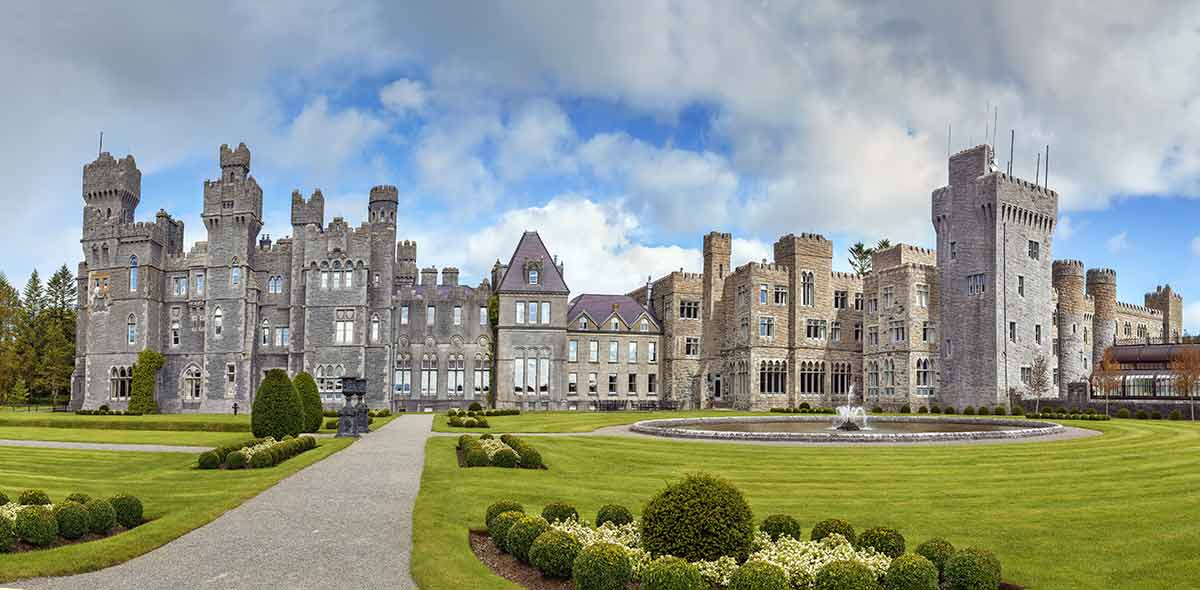
Ireland is a land of ancient legends, rolling green hills, rugged coastlines, and magnificent castles that bring centuries of history to life. Scattered across the Emerald Isle, these remarkable landmarks tell stories of powerful kings, noble families, medieval battles, and timeless folklore. From imposing stone fortresses perched on dramatic cliffs to elegant castles surrounded by lush gardens and tranquil lakes, Ireland’s castles offer a fascinating glimpse into the country’s rich heritage and captivating past………Continue reading…
Source: Travel 2 Next
.
Critics:
Ireland’s culture comprises elements of the culture of ancient peoples, later immigrant and broadcast cultural influences (chiefly Gaelic culture, Anglicisation, Americanisation and aspects of broader European culture). In broad terms, Ireland is regarded as one of the Celtic nations of Europe, alongside Scotland, Wales, Cornwall, Isle of Man and Brittany. This combination of cultural influences is visible in the intricate designs termed Irish interlace or Celtic knotwork.
These can be seen in the ornamentation of medieval religious and secular works. The style is still popular today in jewellery and graphic art, as is the distinctive style of traditional Irish music and dance, and has become indicative of modern “Celtic” culture in general. Religion has played a significant role in the cultural life of the island since ancient times (and since the 17th century plantations, has been the focus of political identity and divisions on the island).

Ireland’s pre-Christian heritage fused with the Celtic Church following the missions of Saint Patrick in the fifth century. The Hiberno-Scottish missions, begun by the Irish monk Saint Columba, spread the Irish vision of Christianity to pagan England and the Frankish Empire. These missions brought written language to an illiterate population of Europe during the Dark Ages that followed the fall of Rome, earning Ireland the sobriquet, “the island of saints and scholars”.
Since the 20th century Irish pubs worldwide have become outposts of Irish culture, especially those with a full range of cultural and gastronomic offerings. Ireland has made a substantial contribution to world literature in all its branches, both in Irish and English. Poetry in Irish is among the oldest vernacular poetry in Europe, with the earliest examples dating from the 6th century.
Irish remained the dominant literary language down to the 19th century, despite the spread of English from the 17th century on. Prominent names from the medieval period and later include Gofraidh Fionn Ó Dálaigh (14th century), Dáibhí Ó Bruadair (17th century) and Aogán Ó Rathaille (18th century). Eibhlín Dubh Ní Chonaill (c. 1743 – c. 1800) was an outstanding poet in the oral tradition. The latter part of the 19th century saw a rapid replacement of Irish by English.
By 1900, however, cultural nationalists had begun the Gaelic revival, which saw the beginnings of modern literature in Irish. This was to produce a number of notable writers, including Máirtín Ó Cadhain, Máire Mhac an tSaoi and others. Irish-language publishers such as Coiscéim and Cló Iar-Chonnacht continue to produce scores of titles every year. In English, Jonathan Swift, often called the foremost satirist in the English language, gained fame for works such as Gulliver’s Travels and A Modest Proposal.
Other notable 18th-century writers of Irish origin included Oliver Goldsmith and Richard Brinsley Sheridan, though they spent most of their lives in England. The Anglo-Irish novel came to the fore in the 19th century, featuring such writers as Charles Kickham, William Carleton, and (in collaboration) Edith Somerville and Violet Florence Martin. The playwright and poet Oscar Wilde, noted for his epigrams, was born in Ireland.
The earliest known Irish graphic art and sculpture are Neolithic carvings found at sites such as Newgrange and is traced through Bronze Age artefacts and the religious carvings and illuminated manuscripts of the medieval period. During the course of the 19th and 20th centuries, a strong tradition of painting emerged, including such figures as John Butler Yeats, William Orpen, Jack Yeats and Louis le Brocquy. Contemporary Irish visual artists of note include Sean Scully, Kevin Abosch, and Alice Maher.



Leave a Reply