Getty Images/ The Good Brigade
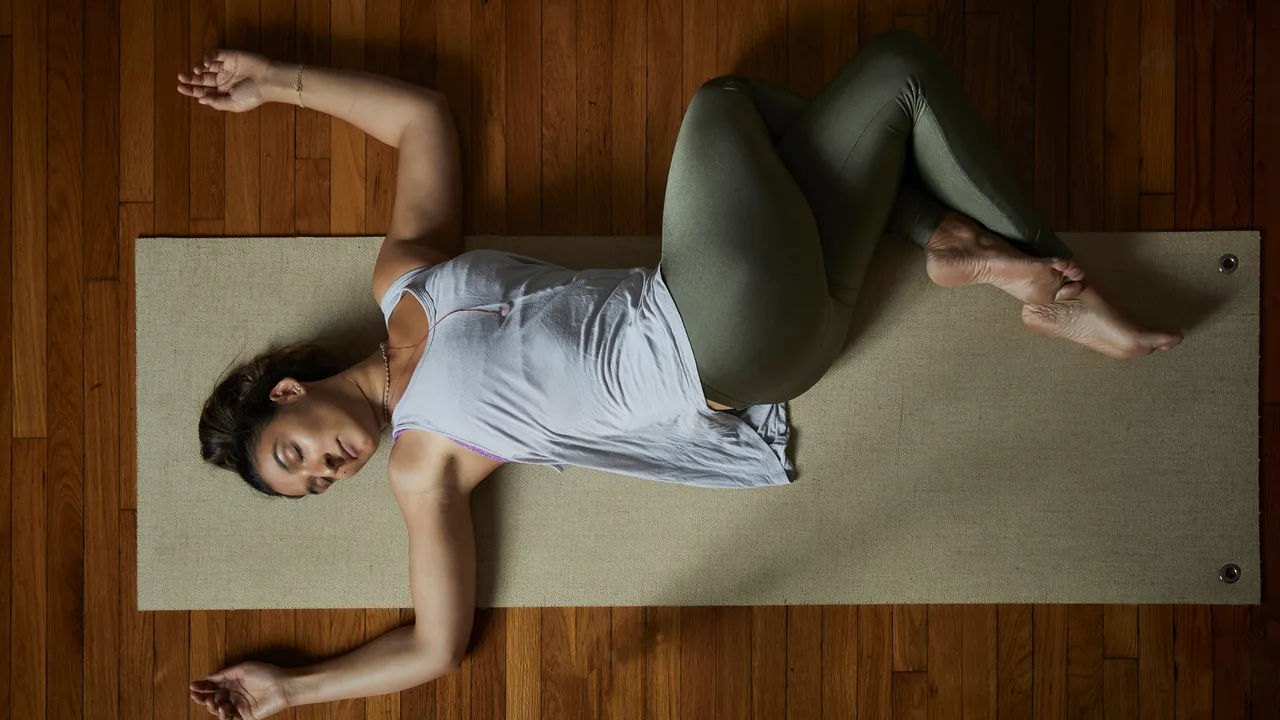
If you have stiff, immobile hips, you’re not alone it’s a common problem for anyone who spends a lot of time sitting. Eloise Skinner is a yoga instructor and she says there’s one type of movement she swears by for relieving tension in this area. “I love twists,” she tells Fit&Well, saying reclined twists are particularly useful for people with weak hips, because they put minimal pressure on the joint. “Lying on your back, you don’t have any extra weight down on the hips, so you can really get into the stretch without putting additional force into it,” says Skinner.……..Continue reading….
By Alice Porter
Source: Fit & Well
.
Critics:
Yoga as exercise, the postural yoga of the Western world, is a physical activity consisting of asanas, often connected by smooth transitions, sometimes accompanied by breathing exercises and usually ending with a period of relaxation or meditation. It is often known simply as “yoga”, despite older traditions in which asanas played little or no part; asanas were not central to any tradition.
Yoga as exercise is a 20th-century blend of Western physical culture and women’s harmonial gymnastics with haṭha yoga, pioneered by Shri Yogendra and Swami Kuvalayananda. Before 1900, hatha yoga had few standing poses; the Sun Salutation (Surya Namaskar) was pioneered by Bhawanrao Shrinivasrao Pant Pratinidhi, the Rajah of Aundh, during the 1920s. Many standing poses used in gymnastics were incorporated into yoga by Krishnamacharya in Mysore between the 1930s and the 1950s.

Several of his students founded schools of yoga. Pattabhi Jois created ashtanga vinyasa yoga, which led to Power Yoga; B. K. S. Iyengar created Iyengar Yoga and systematised asanas in his 1966 book, Light on Yoga; Indra Devi taught yoga to Hollywood actors; and Krishnamacharya’s son, T. K. V. Desikachar, founded the Krishnamacharya Yoga Mandalam in Chennai. Other schools founded during the 20th century include Bikram Choudhury’s Bikram Yoga and Swami Sivananda of Rishikesh’s Sivananda yoga. Yoga as exercise has spread around the world.
The number of asanas used in yoga has increased from 84 in 1830 (as illustrated in Joga Pradipika) to about 200 in Light on Yoga and over 900 performed by Dharma Mittra by 1984. The spiritual goal of haṭha yoga was largely replaced by the goals of physical fitness and relaxation, and many of its more esoteric components were reduced or removed. In modern usage, the term “hatha yoga” denotes gentle exercise, often for women.
Yoga as exercise has developed into a worldwide, multi-billion-dollar business involving classes, teacher certification, clothing such as yoga pants, equipment including yoga mats, books, videos, and holidays. The ancient, cross-legged lotus position and Siddhasana are widely recognised symbols of yoga. The United Nations General Assembly established 21 June as the International Day of Yoga, and it has been celebrated annually around the world since 2015. On 1 December 2016, yoga was listed by UNESCO as an intangible cultural heritage.
The effect of yoga as exercise on physical and mental health has been a subject of study, with evidence that regular practice is beneficial for low back pain and stress.. Yoga as exercises (compaired to no exercises) can improve function and pain in chronic low back pain after three months; there is no evidence that yoga is better or worse than any other back-pain exercises. A 2015 systematic review noted that yoga may be effective in alleviating symptoms of prenatal depression.
Yoga has been a central practice in Jainism. Jain spirituality is based on a strict code of nonviolence, or ahimsa (which includes vegetarianism), almsgiving (dāna), faith in the three jewels, austerities (tapas) such as fasting, and yoga. Jain yoga aims at the liberation and purification of the self from the forces of karma, which binds the self to the cycle of reincarnation. Like yoga and Sankhya, Jainism believes in a number of individual selves bound by their individual karma.
Only through the reduction of karmic influences and the exhaustion of collected karma can one become purified and released. Early Jain yoga seems to have been divided into several types, including meditation, abandonment of the body (kāyotsarga), contemplation, and reflection (bhāvanā).
Classical yoga, ashtanga yoga, or rāja yoga is primarily the yoga outlined in the dualistic Yoga Sutras of Patanjali. The origins of classical yoga are unclear, although early discussions of the term appear in the Upanishads. Rāja yoga (yoga of kings) originally denoted the ultimate goal of yoga; samadhi, but was popularised by Vivekananda as a common name for ashtanga yoga, the eight limbs attain samadhi as described in the Yoga Sutras.
Yoga philosophy came to be regarded as a distinct orthodox school (darsanas) of Hinduism in the second half of the first millennium CE. Classical yoga incorporates epistemology, metaphysics, ethical practices, systematic exercises and self-development for body, mind and spirit. Its epistemology (pramana) and metaphysics are similar to the Sāṅkhya school. The Classical yoga’s metaphysics, like Sāṅkhya’s, primarily posits two distinct realities:
Prakriti (nature, the eternal and active unconscious source of the material world composed of three guṇas) and puruṣa (consciousness), the plural consciousnesses which are the intelligent principles of the world. Moksha (liberation) results from the isolation (kaivalya) of puruṣa from prakirti, and is achieved through meditation, stilling one’s thought waves (citta vritti) and resting in pure awareness of puruṣa. Unlike Sāṅkhya, which takes a non-theistic approach, the yoga school of Hinduism accepts a “personal, yet essentially inactive, deity” or “personal god” (Ishvara).

Thailand arrests British tourist for teaching ‘sex yoga‘ for $229 per couple
.
YogaExercises ,YogaLife ,Mindfulness ,Stretching ,WellnessJourney ,FitForLife ,InhaleExhale ,YogaPractice ,HealthyLiving ,FlowState ,InnerPeace ,StrengthAndFlexibility ,YogaInspiration ,Balance ,Meditation ,SelfCare ,YogaCommunity ,HolisticHealth ,Relaxation


Leave a Reply